Astana and Central Steppes
An architect's capital set upon the steppe, the pine forests of Burabay, the memory of Karlag and the Turkestan mausoleum: northern Kazakhstan's axis in 4 to 7 days.
Astana, renamed Nur-Sultan between 2019 and 2022 before reclaiming its original name, became Kazakhstan's capital in 1997 when Nursultan Nazarbayev transferred power from Almaty. The city stretches across the Ishim River on a steppe plateau at 347 meters elevation, more than 1,200 kilometers north of Almaty. The climate is brutally continental: January ranges between -15°C and -25°C, plunging to -35°C during Siberian cold snaps, while July reaches 28 to 32°C. It ranks among the world's coldest capitals, second only to Ulaanbaatar.
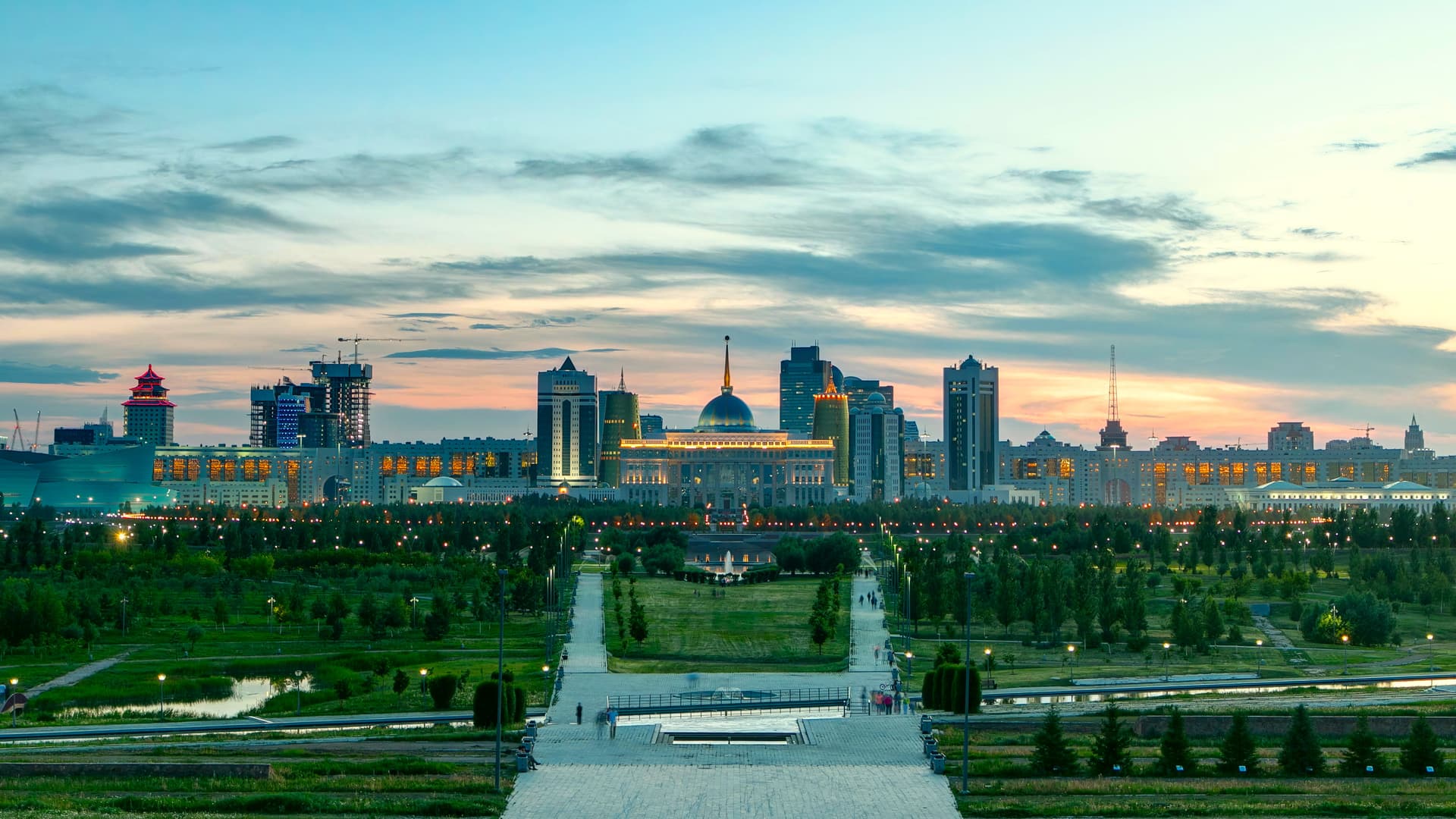
The left bank's architecture, designed by Norman Foster (Baiterek tower, Palace of Peace, Khan Shatyr), Kisho Kurokawa (master plan, airport) and Manfredi Nicoletti (central concert hall), forms a coherent ensemble built in less than two decades. The right bank, older, retains Soviet-era buildings from when the city was called Tselinograd, administrative center of the Virgin Lands opened up by Khrushchev in the 1950s. The National Museum, opened in 2014, covers two hours of Saka, Kipchak, Kazakh khanate and Soviet history. Beyond the city limits, the steppe reasserts itself. We traverse hundreds of kilometers of dry grasslands dotted with Cossack villages, dairy farms and herds of wild horses. The country's interior was the center of nomadic pastoralism until forced collectivization in the 1930s triggered the Asherchilik famine and brutal sedentarization of Kazakh families. Today, extensive herding resumes around Karaganda, the second industrial hub born from coal mining, and the former Karlag (Gulag) camps can be visited in Dolinka: the Museum of Political Repressions occupies the original penitentiary administration building.
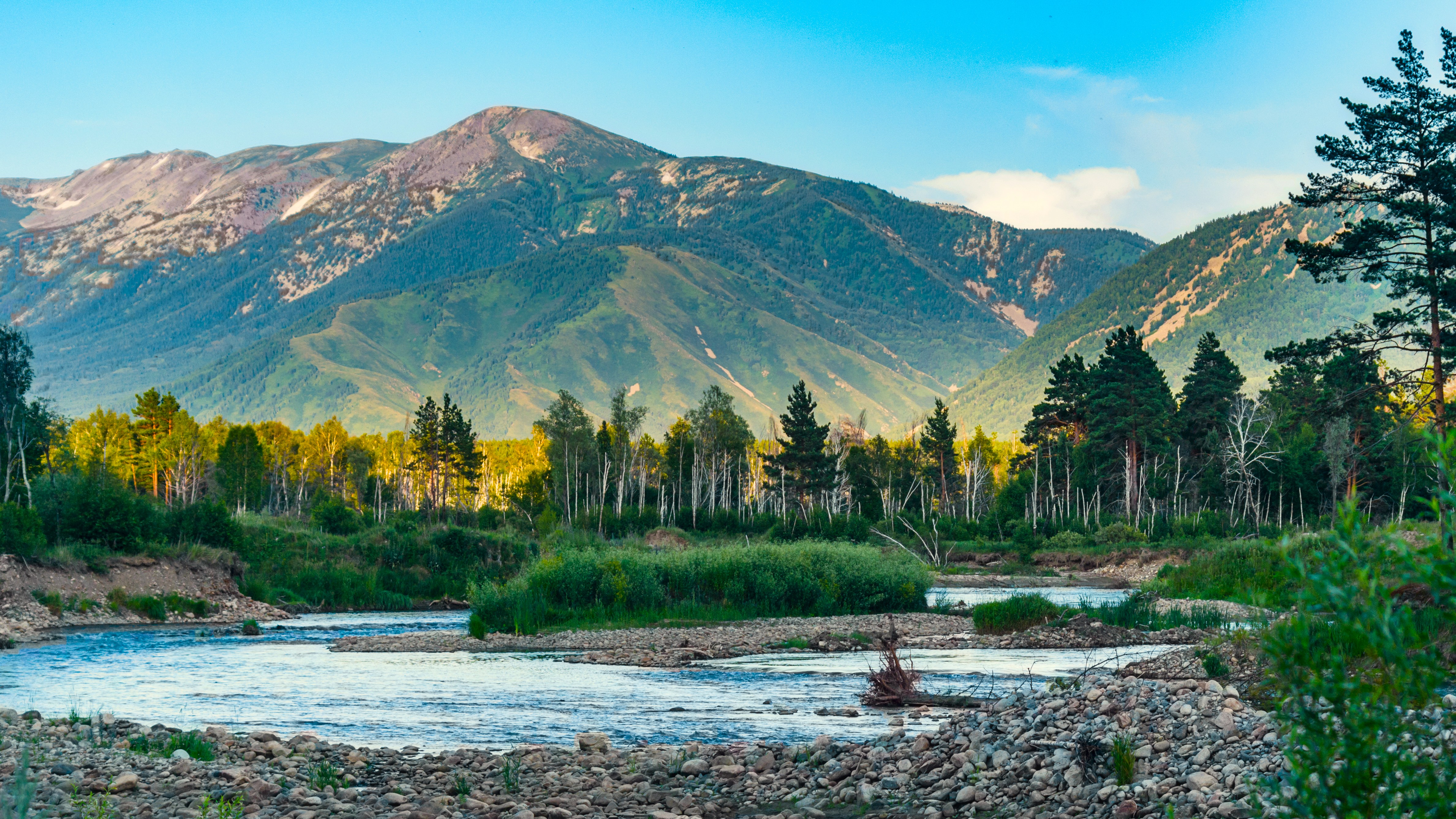
Two hundred fifty kilometers north of the capital, Burabay National Park (Borovoe in Russian) covers 850 km² of pine forests, granite rock formations and lakes: Bolshoe Chebachye, Borovoe, Shchuchye. It has been the traditional summer residence of wealthy Kazakhs since the tsarist era, and the contrast with the surrounding steppe surprises. Trails around Mount Sinyukha (947 m) and Zhumbaktas Rock can be walked in half a day. Further south toward Karaganda, the Begazy-Dandybay necropolis aligns mausoleums from the late Bronze Age (12th-8th centuries BCE), evidence of the culture of the same name studied by archaeologist Alkey Margoulan.
Central Kazakhstan also holds two sites embodying the technical and political memory of the 20th century: the Baikonur Cosmodrome, leased to Russia until 2050, whose manned launches to the ISS can be viewed by advance reservation, and the Semipalatinsk Test Site near the city of Semey, where the USSR conducted 456 nuclear tests between 1949 and 1989. The city of Semey preserves Dostoevsky's house-museum, where he was exiled between 1854 and 1859. At table, cuisine remains faithful to the steppe's repertoire: beshbarmak (flat noodles, lamb and broth), kazy (horse sausage), kurt (dried cheese balls), milk tea served in bowls.
Farther still, 1,500 kilometers south of the capital, the mausoleum of Khoja Ahmed Yasawi in Turkestan, commissioned by Tamerlane in the late 14th century and UNESCO-listed in 2003, marks the boundary between steppe and oasis. We often link it to an Astana-Turkestan-Shymkent circuit to cover the country's north-south axis in roughly a dozen days.
What to Discover
Contemporary architecture of Astana. A full day on foot and by metro linking the Baiterek tower, Foster's Palace of Peace and the Khan Shatyr bazaar, a cap of concrete and glass set upon the steppe.
Burabay National Park. Two days amid lakes and pine forests, hiking to Zhumbaktas Rock and nights in a rehabilitated Soviet sanatorium, three hours' drive north of the capital.
Khoja Ahmed Yasawi Mausoleum. A 38-meter turquoise dome rising above Turkestan, Tamerlane's unfinished project whose bronze doors open onto the tomb of the sufi who died in 1166.
Karlag Memory in Dolinka. Visit the museum installed in the former Gulag administration building, 45 km from Karaganda, to understand the deportation of peoples (Chechens, Volga Germans, Koreans) to the central steppes.
Begazy-Dandybay Necropolis. Stone mausoleums from the Bronze Age scattered across the steppe southeast of Karaganda, accessible by 4x4 on a half-day excursion from the city.
When to Go
We recommend this region between late April and early October. May and June offer a green steppe, wildflowers of tulips and poppies, with temperatures of 15 to 25°C. July and August are warm (28 to 33°C by day) but allow swimming in Burabay's lakes, where water reaches 20°C. September remains pleasant (15 to 22°C) and the colors of birches and aspens around the lakes justify the detour alone.
From October through April, cold becomes the main subject: Astana regularly drops below -25°C from December to February, with steppe winds making the wind chill considerably sharper. Outdoor sites (Begazy, Burabay) remain accessible in winter with proper gear and a reliable vehicle, but days are short (sunrise at 9am, sunset at 5pm in December). March and early April are best avoided: thaw, mud, impassable tracks to archaeological sites.
Practical Advice
We recommend a minimum of 4 to 5 days: two days in Astana, two days in Burabay, one day for Karaganda and Dolinka. Nursultan Nazarbayev International Airport (NQZ) receives direct flights from Frankfurt, Istanbul, Dubai and Beijing, plus frequent domestic connections to Almaty (1.5 hours flight) and Shymkent. Main highways (M-36 south, A-343 toward Karaganda) are in good condition; beyond, we switch to 4x4 with driver.
The most logical combination is Astana plus Almaty and Tian Shan over two weeks, with a domestic flight to save the 1,200 km of road. Travelers interested in Silk Road history will extend south (Turkestan, Otrar, Shymkent) aboard overnight Talgo trains. Hotel comfort is good in Astana (international chains) and Burabay (sanatoriums and lodges), more modest in Karaganda. This region suits travelers curious about contemporary history, architecture and open landscapes, less so those seeking high-altitude trekking, who will favor the Kazakh Altai or Tian Shan.