Almaty
Almaty
At the foot of the Tian Shan, Almaty blends Soviet heritage, Central Asian bazaars and spectacular mountains. The complete guide to prepare your trip.
Nestled at the foot of the majestic Tian Shan mountains, Almaty captivates from the very first glance with its distinctive atmosphere. Both elegant and vibrant, the city naturally blends ancient heritage with contemporary energy. Its tree-lined boulevards, lively rhythm of life and spectacular natural setting give it a singular charm, far removed from the usual stereotypes of Central Asia. Almaty is more than just a major Kazakh metropolis. It is a place of character, where identity, memory and modernity coexist harmoniously.
Where is Almaty located?
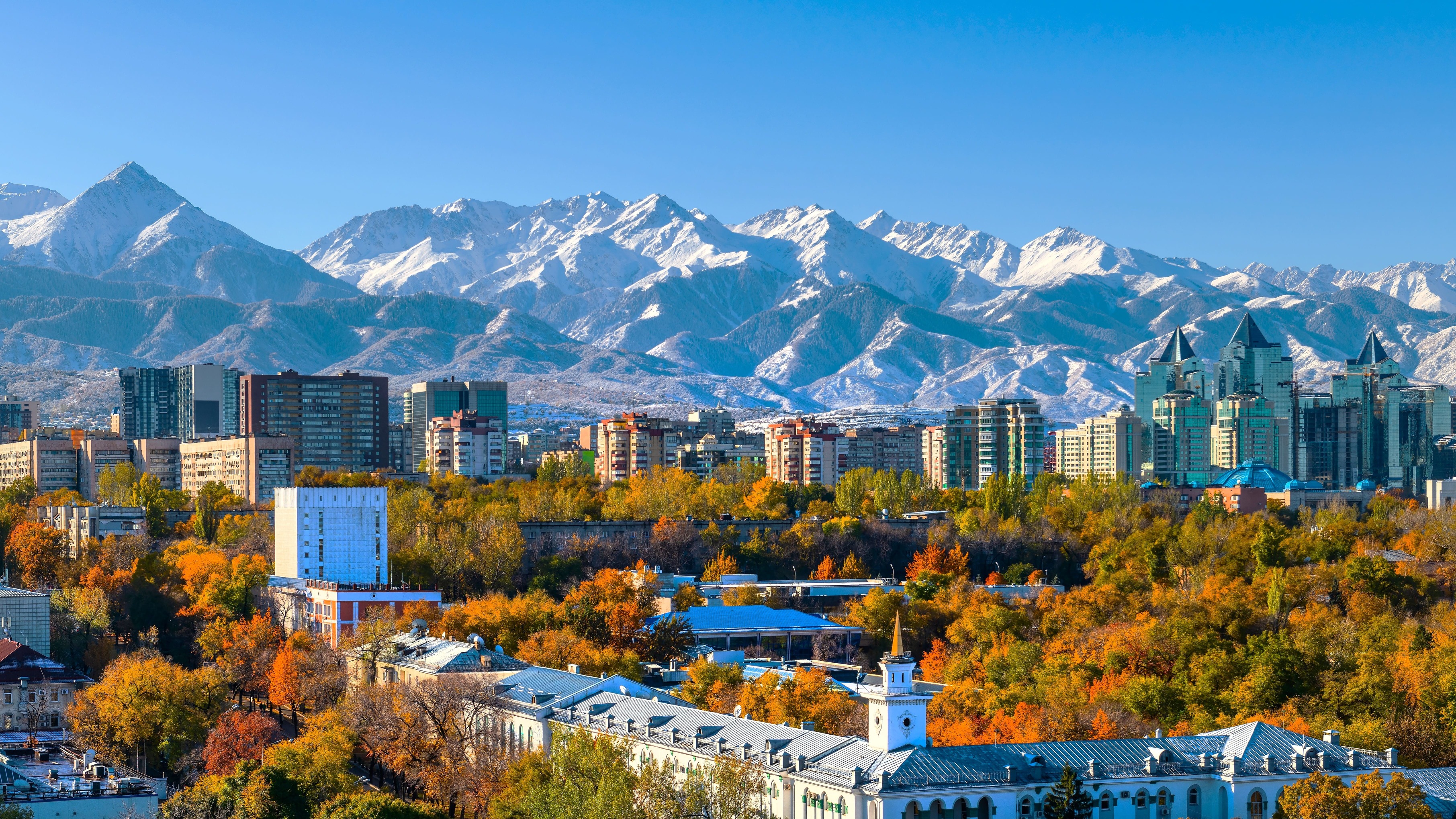
Almaty lies in the south-east of Kazakhstan, near the borders of China and Kyrgyzstan, in the heart of a valley nestled against the foothills of the Trans-Ili Alatau range. The latter is also called Zailiysky Alatau, and forms part of the vast Tian Shan massif. Situated at approximately 700 metres altitude, the city offers a remarkable panorama of often snow-capped peaks, visible almost year-round in clear weather. It is crossed by several watercourses, notably the Greater and Lesser Almatinka (Malaya Almatinka), supplemented by tributaries, reservoirs, canals and a traditional network of irrigation ditches called "aryks", essential in its relatively dry climate.
History
Almaty has been inhabited since prehistory, with human traces dating from the 6th-3rd centuries BC. The Saka tribes and later the Wusun lived there before the city of Almatu developed from the 9th to 13th centuries along the Silk Road. Conquered by the Mongols in the 13th century and later mentioned under the name Almalyk, the city was gradually abandoned and reduced to ruins by the end of the 16th century.
The modern city was born in 1854, when the Russian Empire founded the military fort of Verny (Vernoye) on the site of an ancient oasis. It quickly became an administrative centre of Semirechye, populated by Russian settlers, Cossacks and political exiles. Despite violent earthquakes in 1887 and 1911, Verny continued to grow: it had around 23,000 inhabitants in 1897 and 41,000 in 1913, predominantly Russian.
On 5 February 1921, Verny was renamed Alma-Ata, and became the capital of Soviet Kazakhstan between 1927 and 1936. Its growth accelerated with the opening of the Turkestan-Siberia railway in 1930 and during the Second World War, when it hosted evacuated industries, Slavic workers and Koreans deported from the Far East.
In the 1970s-1980s, under the impetus of Dinmukhamed Kunayev, the city transformed with major Soviet buildings such as the Arasan baths, the Kazakhstan Hotel and the Academy of Sciences. In 1991, Alma-Ata hosted the conference that officially marked the end of the USSR.
Renamed Almaty in 1993, a name meaning "place/father of apples" in reference to Malus sieversii, the city lost its capital status in 1997-1998 to Astana, but retained a central role.
Climate
Almaty experiences a humid continental climate, marked by cold, snowy winters, with temperatures dropping to around -20°C in January, and hot, sunny summers, where highs can reach 35°C, especially in July. Spring and autumn offer the most pleasant conditions for a visit, despite occasional sudden spring rains. The ideal periods for visiting the city extend from late spring to early autumn, notably from April to June and from September to October.
Almaty today
Covering approximately 682 km², Almaty is Kazakhstan's largest city and its main financial, scientific, cultural, historical and industrial centre. A former capital for nearly 70 years, it is today often nicknamed the "capital of the South", reflecting its economic dynamism and intense social and cultural life.
A genuine economic engine of the country, the city hosts major banks, enterprises, insurance companies and the main logistics hub. It also plays a major role in higher education and research through its universities and specialized institutes. Almaty also captivates through its unique blend of modernity and traditions, alternating between European-style neighbourhoods, luxury shops and the lively atmosphere around the bazaars.
The city, organized in regular blocks, is mainly identified by intersections, often designated by street crossings, sometimes still called by their old names. The local currency is the Kazakh tenge (KZT), and Visa and MasterCard are widely accepted. Kazakh is the official language, Russian is commonly used, and English is present in tourist areas.
What to see and do in Almaty?
Museum and cultural heritage
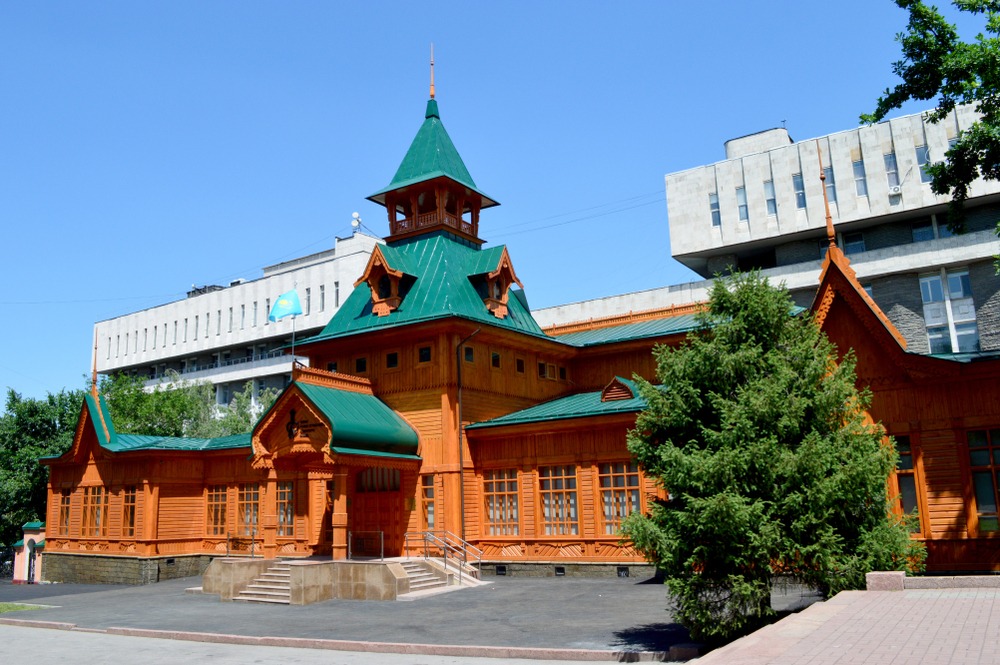
With over 30 museums, Almaty is a major cultural centre. The Central State Museum of Kazakhstan, one of the largest in Central Asia, traces the country's history from Genghis Khan to modern times. The National Central Museum and the Museum of Traditional Musical Instruments, located near Panfilov Park, complete this cultural immersion. The Kasteev Museum of Fine Arts houses the finest art collection in the country, blending Kazakh, Russian and European works. Theatres, opera houses and ballets, notably the Abai Opera and the Auezov Theatre, punctuate the city's cultural life.
Iconic monuments
Panfilov Park is one of Almaty's most emblematic locations. It is home to Zenkov Cathedral (or Cathedral of the Ascension), one of the highest wooden structures in the world, famous for having withstood the 1911 earthquake. It also features the memorial to the 28 Panfilov Guards. Republic Square impresses with its Independence Monument topped by the Golden Warrior, offering spectacular views of snow-capped mountains on clear days. The Central Mosque, in white marble with a golden dome, is one of the largest in the country and can accommodate up to 3,000 worshippers.
Urban parks and way of life
Almaty is a green city, with numerous parks such as Gorky Central Park, the First President Park and the botanical garden. The pedestrian streets Panfilova and Arbat (Zhibek Zholy) are ideal for strolling between cafés, fountains, street artists and murals. The city is also famous for its over 120 fountains, celebrated each spring during Fountain Day.
Kok-Töbe and panoramas
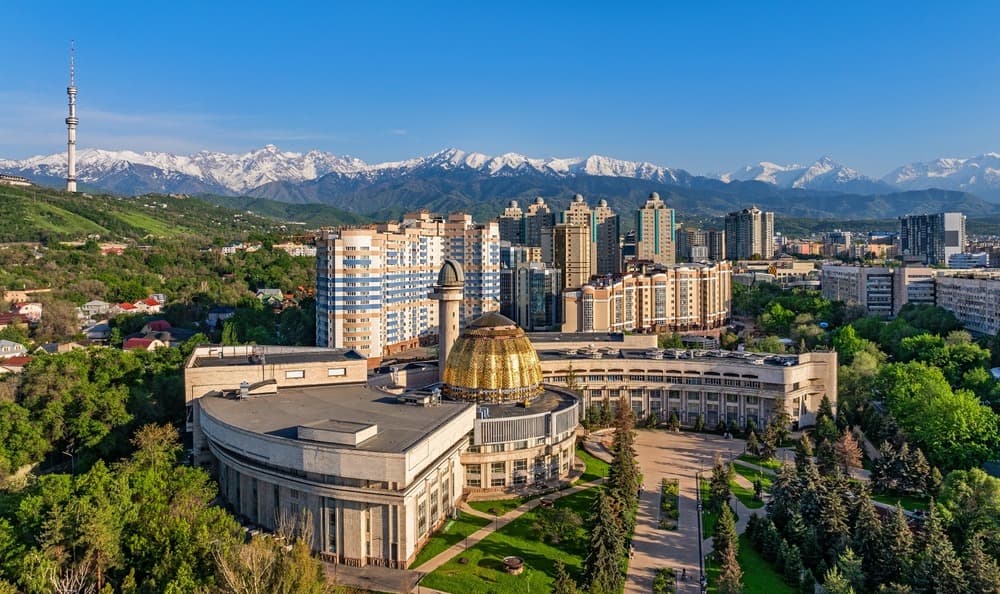
Kok-Töbe hill is one of Almaty's symbols. Accessible by cable car from the city centre, it offers a spectacular panoramic view. There is an amusement park, restaurants, viewing platforms, the famous Beatles statue and the 372-metre television tower, the city's highest structure.
Nature and outdoor activities
Thanks to its immediate proximity to the Trans-Ili Alatau mountains, Almaty is an ideal departure point for hiking, skiing and nature excursions. Big Almaty Lake, located about an hour's drive away, captivates with its turquoise waters and alpine scenery. Ile-Alatau National Park, the surrounding gorges and Kolsai Lakes offer exceptional panoramas. In winter, the Medeu complexes, famous for its record-altitude ice rink, and Chimbulak ski resort attract winter sports enthusiasts.
Markets, shopping and gastronomy
The Green Market is a must for:
- Discovering the atmosphere of a Central Asian bazaar
- Tasting local specialities such as beshbarmak, plov, laghman, kymyz or shubat
- Buying fresh produce and souvenirs.
For modern shopping, the city has numerous shopping centres such as Dostyk Plaza, Esentai Mall or MEGA Park. The nightlife is lively, notably around Golden Square and Sky Bar Street, with many international clubs, bars and restaurants.
Well-being and local experiences
The Arasan baths offer a relaxing experience typical of the region, with Russian, Finnish or Oriental baths. Finally, to discover Almaty differently, guided walking tours allow you to explore Soviet architecture, hidden monuments and the lesser-known history of the city.
Almaty is easily accessible thanks to its international airport, located approximately 15 to 25 km north-east of the city centre. It is served by numerous airlines connecting Europe, Asia, Russia and the Middle East, notably Air Astana. From the airport, the city centre can be reached by municipal bus (line 92, in approximately 45 minutes), by taxi or by rental car.
The city also has railway stations (Almaty-1 and Almaty-2) with national and international connections. It is also equipped with intercity bus stations connecting Kazakhstan to neighbouring countries such as Kyrgyzstan, China, Russia and Uzbekistan.
Almaty has an extensive and affordable public transport network, comprising approximately 150 bus lines, 9 trolleybus lines and a modern metro with one line and 9 stations, operating from 6am to midnight. Payments are made by rechargeable ONAY card, in cash or by bank card.
Taxis are very numerous and it is recommended to use mobile applications for greater safety and transparency. Car rental, ranging from economy to luxury models, is a good option for exploring the surroundings.
The city also offers bike and scooter sharing services, as well as a cable car connecting the city centre to Kik-Töbe hill, providing a convenient and panoramic means of transport.
Attractions in Almaty
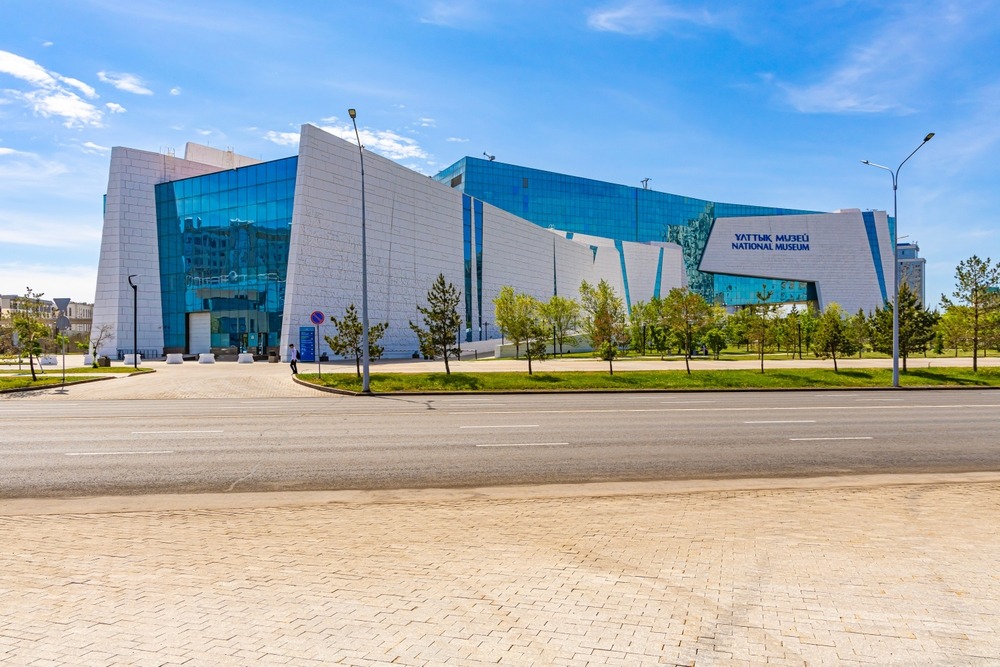
Musée central national de la République du Kazakhstan
Le plus grand musée du Kazakhstan, à Almaty : 300 000 objets répartis en sept salles, dont l'Homme d'Or saka et les trésors en or des nomades.
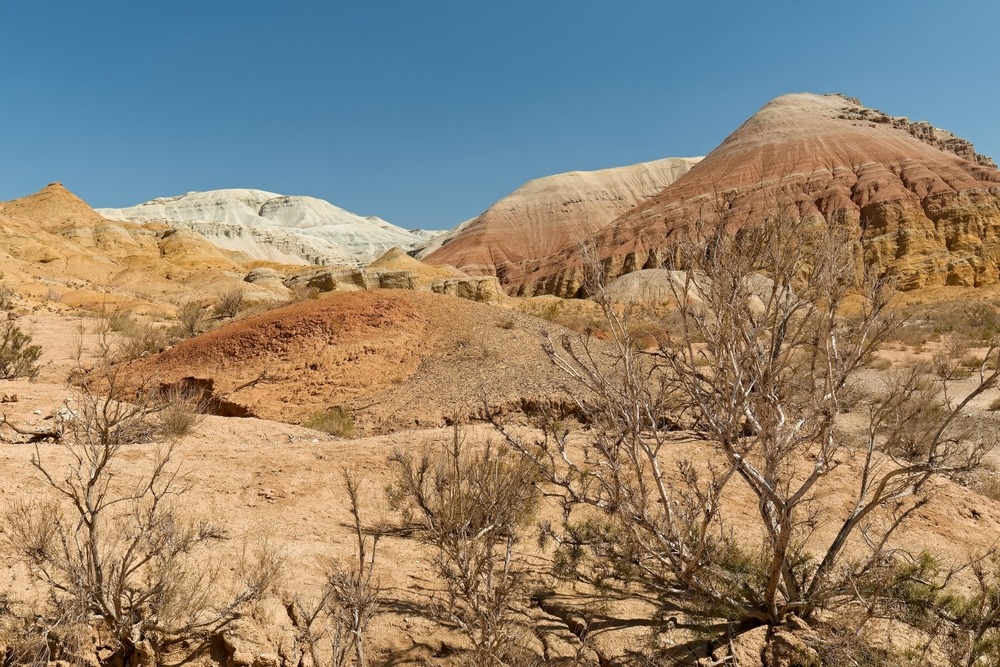
Montagnes Aktau
Au sud-est du parc Altyn-Emel, les montagnes Aktau alignent crêtes multicolores, fossiles cénozoïques et faune steppique, à 5-7 heures de route d'Almaty.
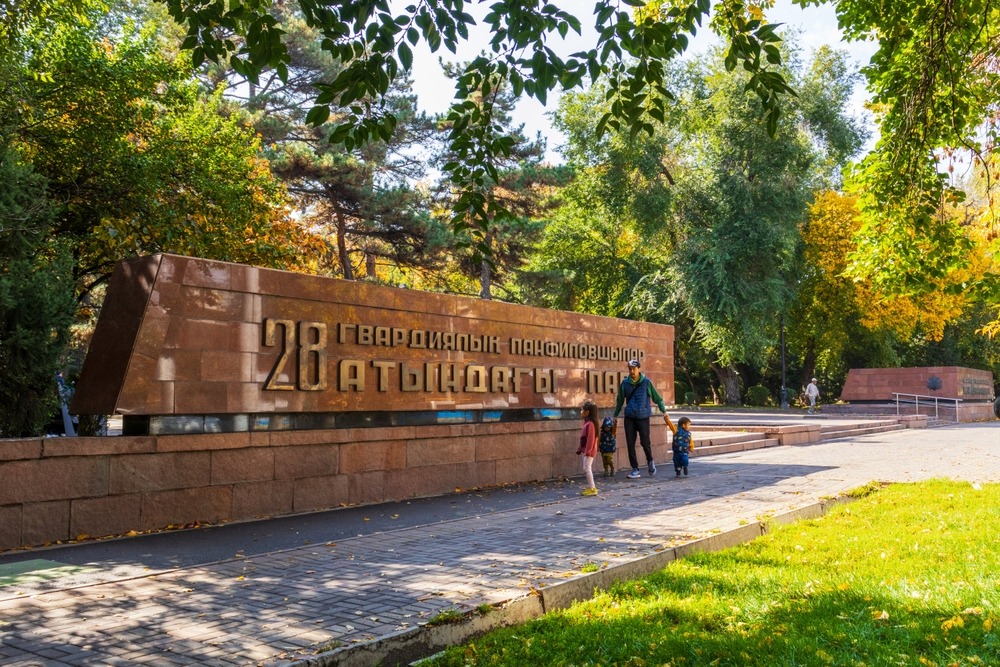
Parc des 28 Gardes Panfilov
Au centre d'Almaty, le Parc des 28 Gardes Panfilov réunit une cathédrale en bois centenaire, un mémorial soviétique et un musée d'instruments kazakhs.
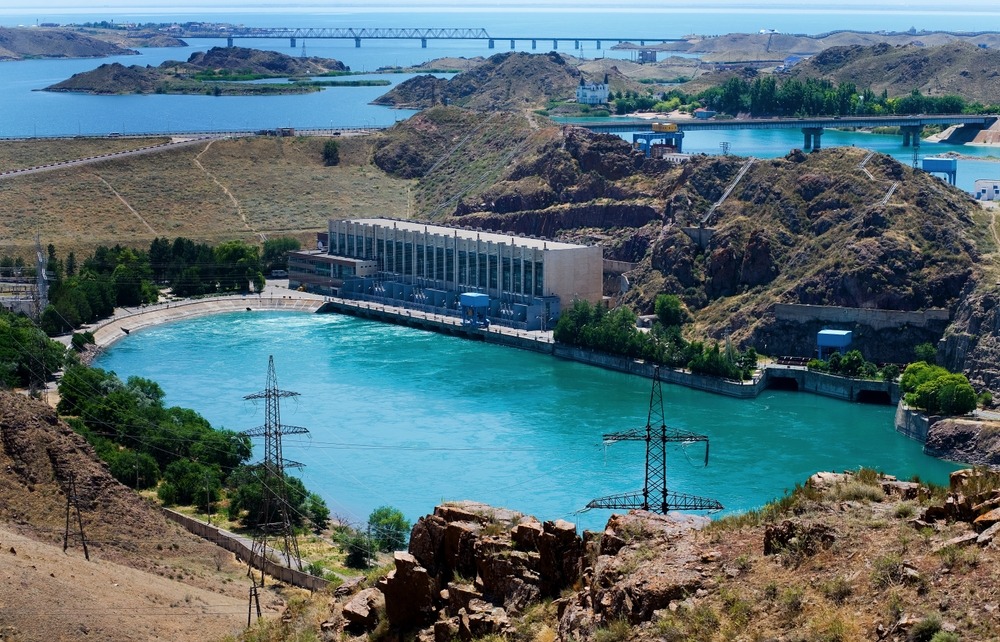
Réservoir de Kapchagay
À une heure d'Almaty, le plus grand réservoir artificiel du Kazakhstan combine plages estivales, activités nautiques, pêche et héritage soviétique autour de la ville de Qonaev.
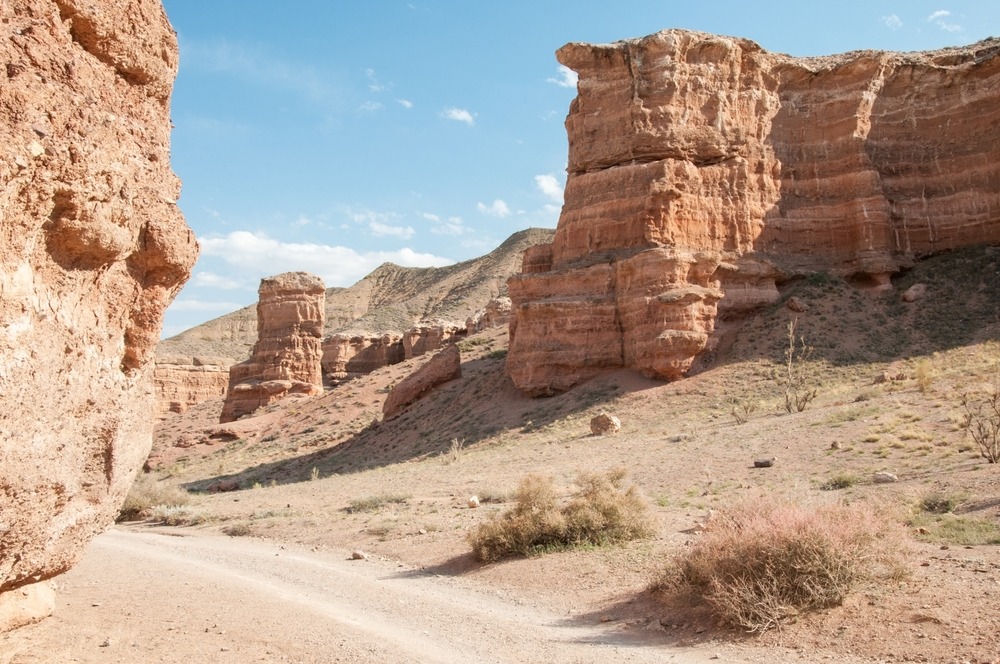
Canyon de Charyn
À 190-220 km d'Almaty, le canyon de Charyn déroule 154 km de falaises de grès rouge sculptées depuis 12 millions d'années par la rivière Charyn.
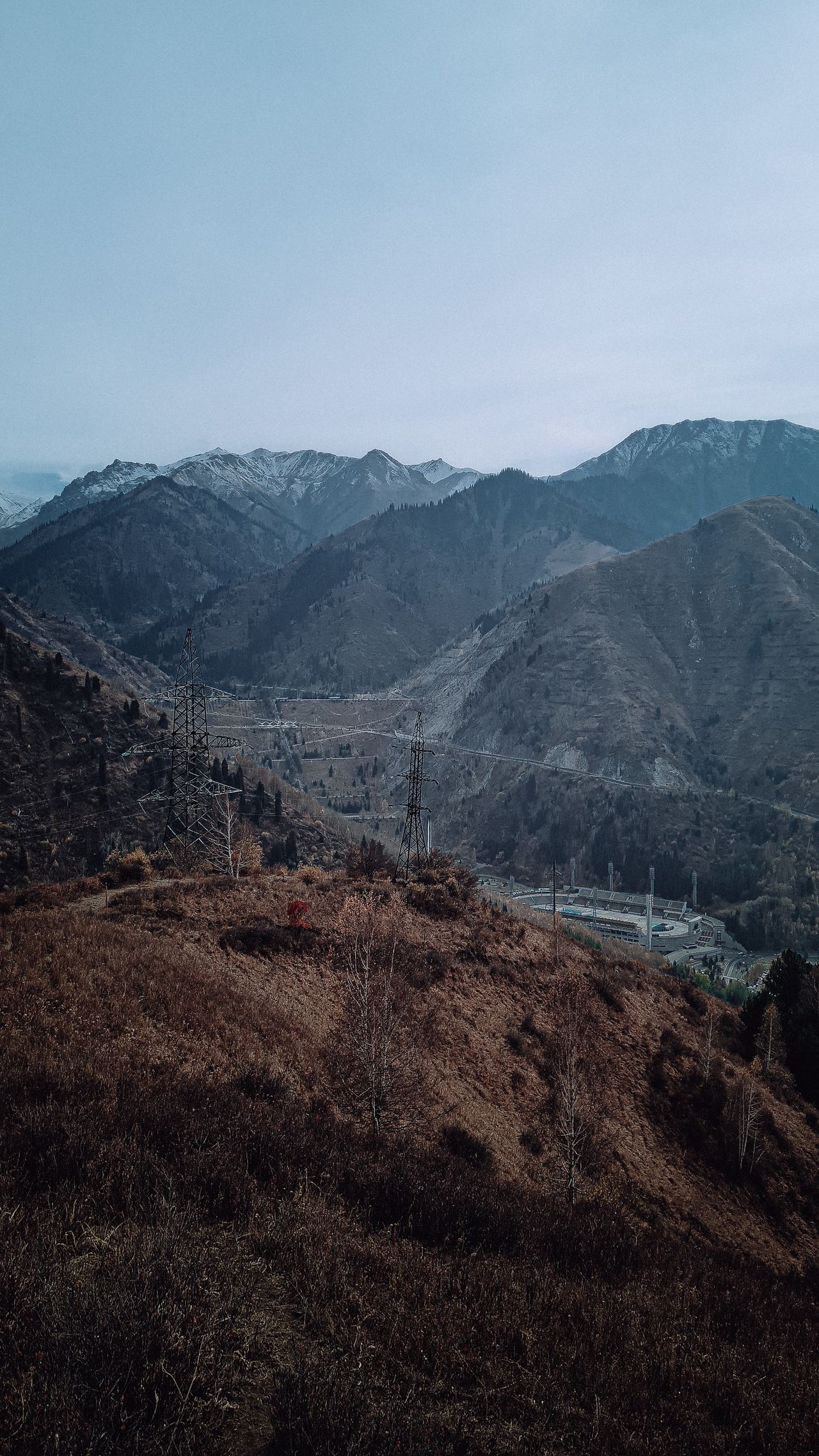
Koktobe (colline)
Koktobe offre le panorama le plus accessible sur Almaty et les sommets du Tian Shan. On y monte en téléphérique ou à pied, pour une vue unique sur la ville et ses montagnes.
Accommodation in Almaty
Want to discover this destination?
Our local advisors design your tailor-made trip.