Jarkent or Zharkent
Jarkent or Zharkent
Just 20 km from the Chinese border, Jarkent reveals a nail-free wooden Uyghur mosque and a captivating Silk Road heritage.
Nestled in the heart of southeastern Kazakhstan, Jarkent intrigues with its understated charm and timeless atmosphere. This town of quiet streets and layered influences evokes a fascinating blend of traditions and cultures, where every corner seems to whisper ancient stories. Between mountain horizons, tranquil rivers, and the scent of spices drifting through the air, Jarkent offers a first impression that captivates and sparks a desire to uncover its best-kept secrets.
Where is Jarkent Located?
Jarkent, also transliterated as Zharkent, is situated in the Jetyssou region (or Jetysu) and serves as the administrative center of Panfilov District. The town lies near the Chinese border, approximately 30 km away, and is sometimes called the "Gateway to the East" due to its strategic position on the main route connecting China to Kazakhstan.
Zharkent sits along the Usek River, a tributary of the Ili River, and is surrounded by the picturesque landscapes characteristic of the Jetyssou region. It is located roughly 307 to 350 km from Almaty, depending on the route taken, and just 100 km from the city of Gulja in China. The town is also the closest settlement to the Khorgos border crossing, situated approximately 20 km to the east.
History
Jarkent's history stretches back several centuries, long before its establishment as a modern town. The region once served as a fortified outpost along the Great Silk Road, as evidenced by archaeological discoveries. It was also here that historic battles took place between the Dzungars and the Kazakhs.
The modern town of Zharkent was officially founded in 1881 or 1882 (sources vary) under Russian authority, on the site of several former Uyghur villages. At that time, Russian general Alexei Kuropatkin was tasked with finding a suitable location to establish a Russian administrative center intended to protect the eastern borders of the Russian Empire.
In its early days, the town was inhabited primarily by Cossacks, charged with frontier security, while Uyghurs and Dungans who arrived from Gulja in 1881 became the region's first "merchant-shuttlers." This settlement of Muslim refugees was linked to the Russo-Chinese peace treaty of Saint Petersburg, which stipulated the return of the eastern Ili Valley to China. The Muslim inhabitants of the region were given the choice to stay or join Russian territory, which quickly led to the village's growth.
Jarkent officially acquired city status in 1891 or 1892, becoming a regional center from 1928 onwards. During this period, new enterprises were established, including a brewery and a tobacco factory, while shops offered Chinese and Russian goods, and artisans supplied travelers with necessary materials and wares.
From 1942 to 1991, Jarkent was renamed Panfilov, in honor of Major General Ivan Panfilov, a Second World War hero and commander of the 316th Rifle Division, who died in combat in 1941. Following Kazakhstan's independence in 1991, the town reclaimed its traditional name of Zharkent, while the district retained the name Panfilov.
Over time, Jarkent became an important trading post and cultural hub along the Silk Road, witnessing centuries of exchange between the Kazakhstan region and China. The town preserves relics of its past today, blending Uyghur heritage, Russian influence, and its strategic role in regional commerce.
What to See and Do in Jarkent?
The Zharkent Mosque
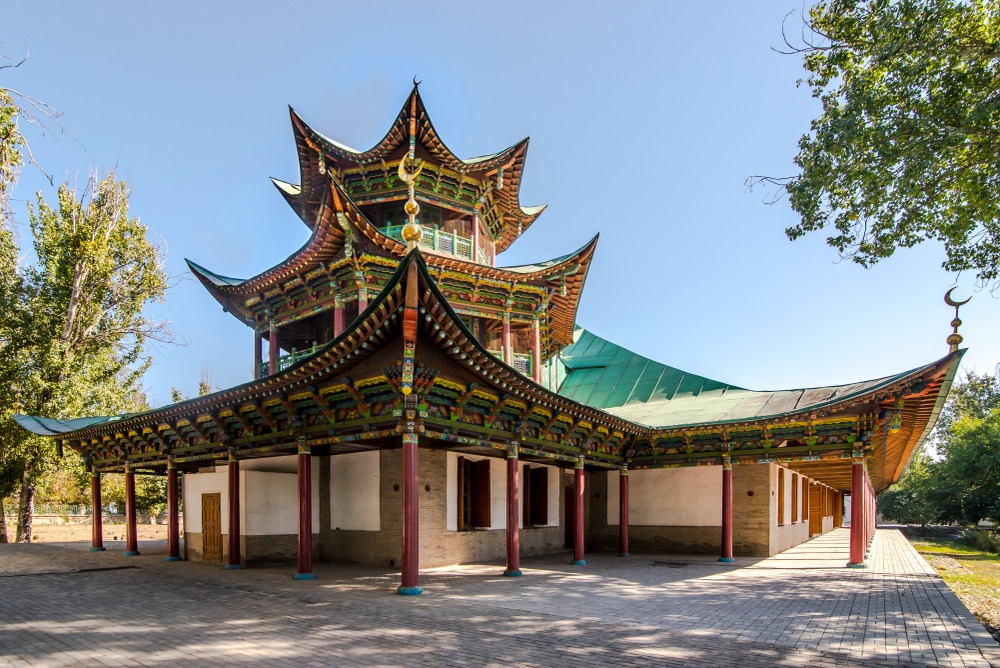
The town's main symbol is its historic 19th-century mosque, constructed between 1887 and 1892 thanks to the patronage of wealthy merchant Valiakhun Yuldashev and under the direction of Chinese architect Hun Pit. This wooden mosque, assembled without nails, is distinguished by its blend of Chinese and Central Asian architecture, featuring pagoda-shaped roofs, carved columns, and intricate decorative motifs. It can accommodate approximately 1,000 worshippers, and its minbar and mihrab reflect Chinese and Central Asian artistic traditions. Restored in the 1970s, it is now classified as an architectural and historical museum.
Prophet Elijah Temple (Orthodox Church)
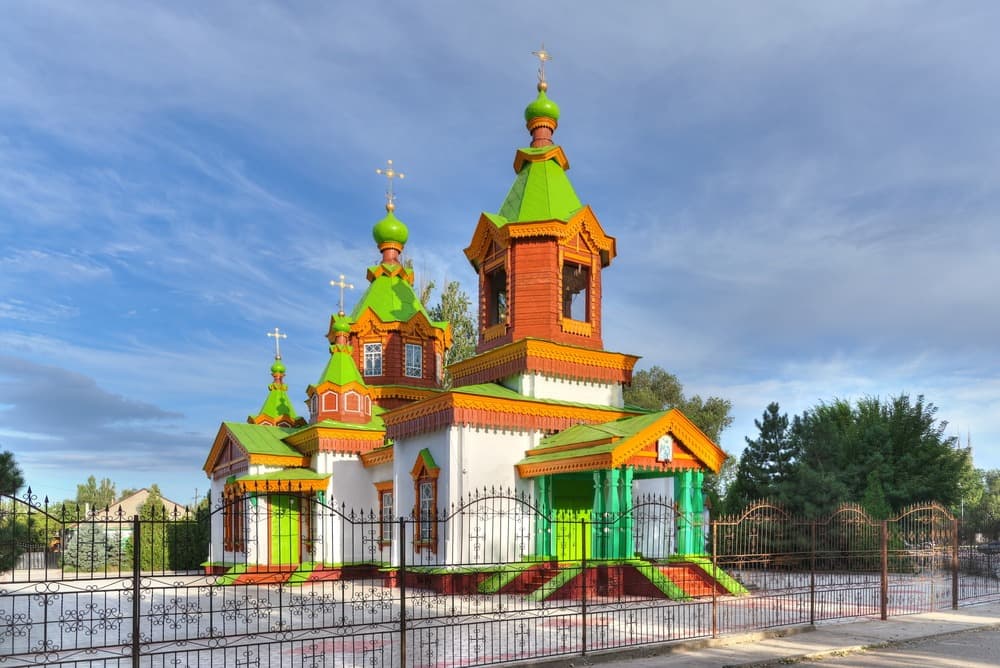
Nearby stands the Prophet Elijah Temple, an Orthodox wooden church built in 1892 by local Cossacks. Constructed from Tian Shan spruce, it exemplifies the town's religious tolerance and the cultural blend between Russian and local influences.
Museums and Culture
Jarkent is home to several cultural institutions:
- Military Museum and Local History Museum, chronicling the region's and surrounding steppe's history.
- Abylkhan Kasteev Art Gallery, dedicated to the celebrated Kazakh painter from the region.
- House of Culture, a venue for concerts, folk performances, and local exhibitions.
- Central Bazaar: a lively traditional market where you can discover fresh produce, spices, local breads, and interact with residents.
Urban Life and Gastronomy
Jarkent is also a vibrant and welcoming hub. The town features cafés, restaurants, family tea rooms, small hotels, and artisan workshops where you can observe woodworking and local craftsmanship. Visitors can taste local specialties, such as plov, samsa, or lagman, while sharing moments with the locals.
Natural and Spiritual Sites
The town is surrounded by picturesque landscapes offering numerous exploration opportunities:
- Ili River banks: walks, observation of fishermen, picnics, and sunsets.
- Aulie Agash: a sacred elm tree 700 years old, a pilgrimage site and spiritual symbol for the population.
- Proximity to Charyn Canyon and Altyn-Emel National Park, allowing visitors to combine cultural visits with nature adventures.
Zharkent is accessible from Almaty via the main Almaty-Khorgos road (A353), which leads directly toward the Chinese border. The journey covers approximately 300 km and typically takes 3.5 to 4 hours, depending on the route chosen, using the A-351 highway, then the E-21 road.
Transport options to reach the town include intercity buses, shared taxis, or rental cars. The nearest international airport is located in Almaty, from where you can easily catch a bus or rent a car to travel to Jarkent.
It is also worth noting that the town integrates easily into a tour combining visits to Charyn Canyon, Altyn-Emel Desert, and Chunja hot springs. This allows for a complete immersion in the history, culture, and landscapes of the region.
When to Visit?
Jarkent enjoys a continental climate, characterized by cold, dry winters, with temperatures often dropping below -10°C, and warm summers, reaching up to 30°C. The best times to visit the town are spring and autumn, when the climate is pleasant and daytime temperatures range between 15 and 22°C. To fully enjoy the fresh air, soft light, and fewer crowds, it is recommended to plan your stay for late May or early September.
Want to discover this destination?
Our local advisors design your tailor-made trip.