Mausoleum of Khoja Ahmed Yasawi
Mausoleum of Khoja Ahmed Yasawi
A UNESCO-listed Timurid monument, the Mausoleum of Khoja Ahmed Yasawi in Turkestan houses the tomb of the great Sufi poet and features an iconic turquoise dome commissioned by Timur in 1389.
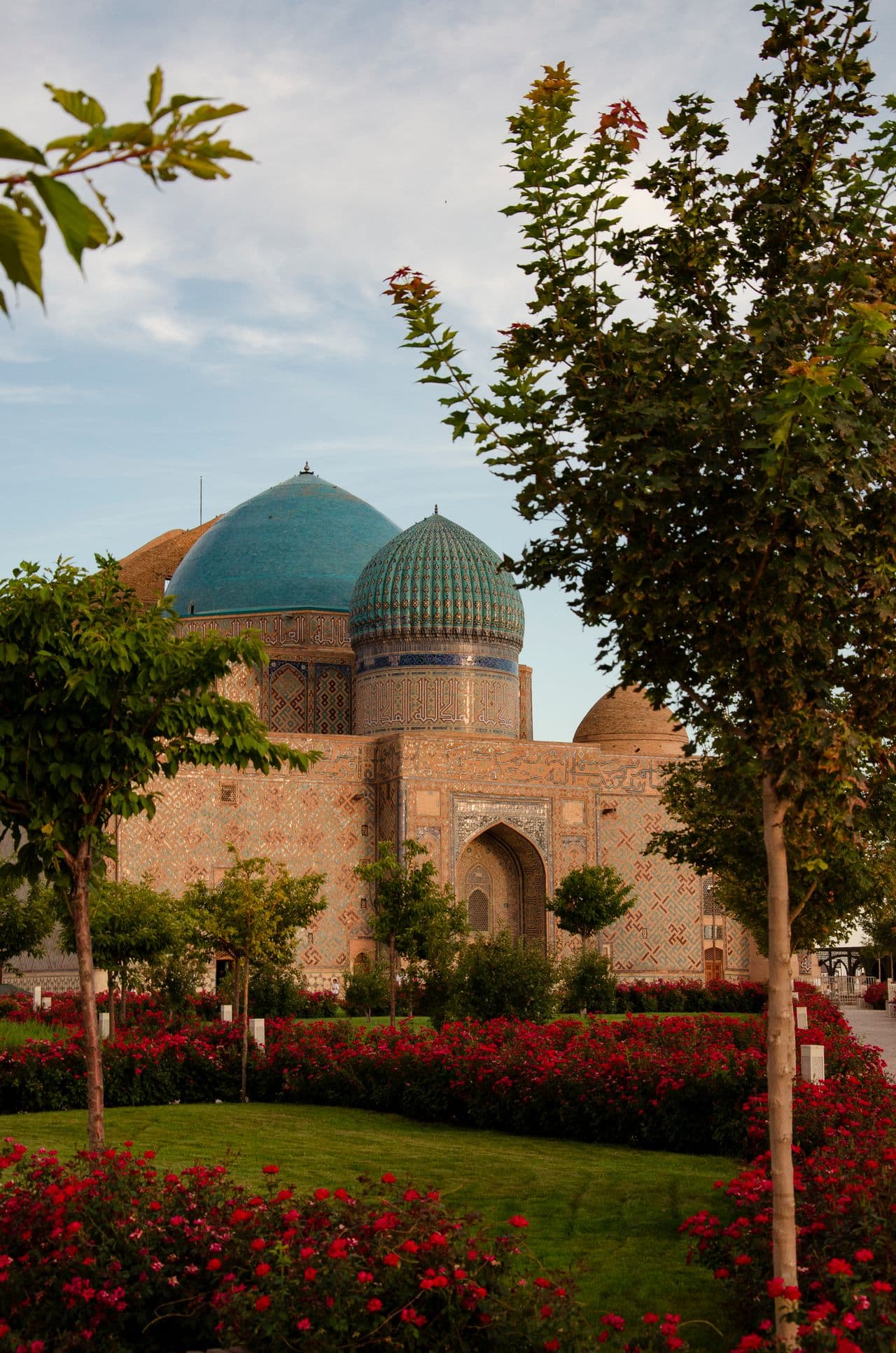
At the heart of Turkestan, the Mausoleum of Khoja Ahmed Yasawi stands as Central Asia's finest preserved medieval monument. Commissioned by Timur at the end of the 14th century, it houses the tomb of the Sufi poet who profoundly shaped Turkic Islam. Its turquoise dome dominates the Kazakh steppe and has earned the site UNESCO World Heritage status since 2003.
Practical Information at a Glance
- Admission: paid entry (museum access included)
- Dress code: modest attire required; women must cover their heads indoors
- Footwear: shoes must be removed before entering the tomb chamber
- Recommended duration: 1.5 to 2 hours for the mausoleum and adjacent museum
- Access: downtown Turkestan, walkable from the railway station
What to See
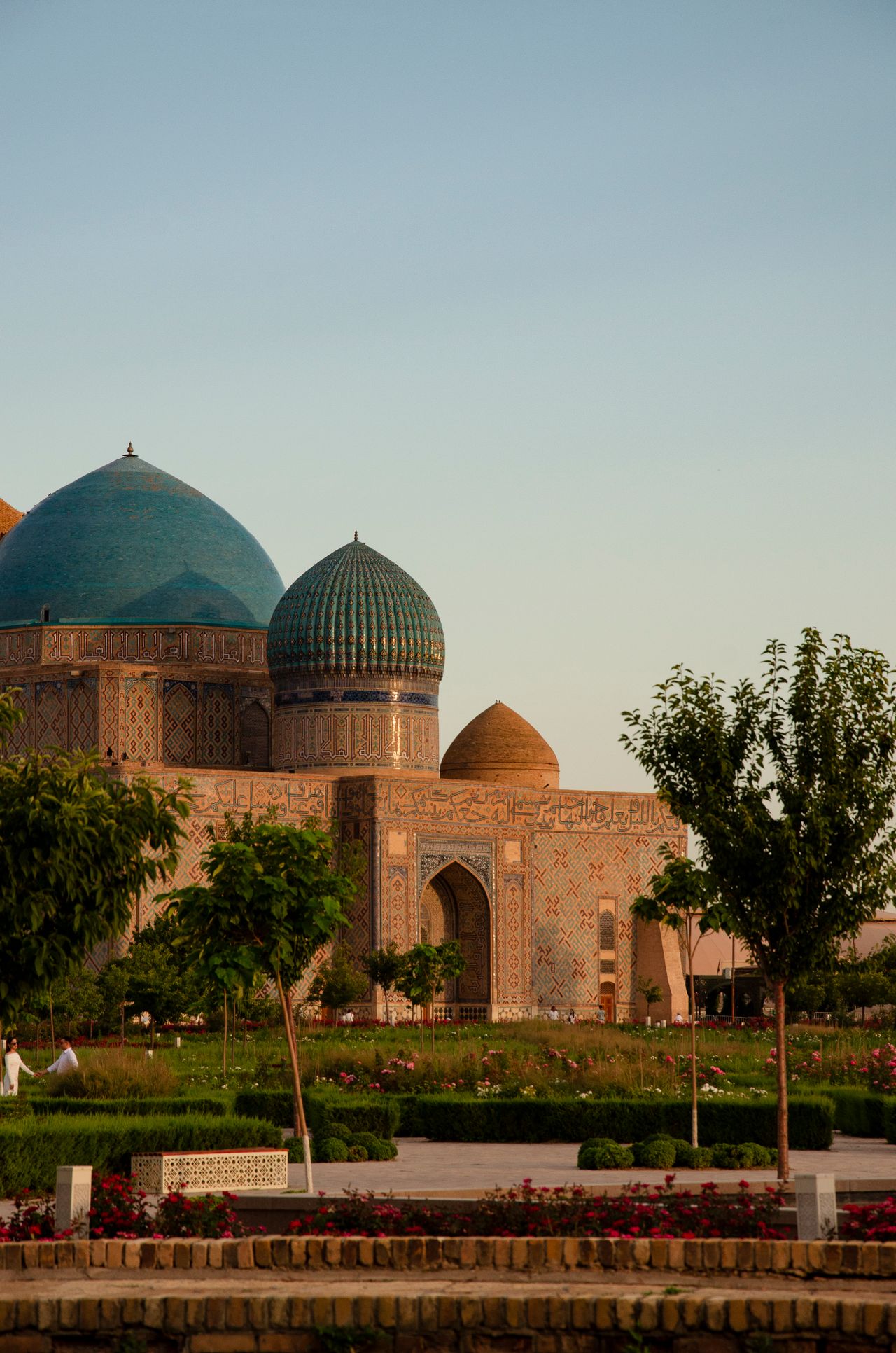
The terracotta façade is covered in turquoise glazed tiles and Quranic calligraphy. The interior reveals a succession of vaulted chambers: the main hall houses the kazan, an enormous bronze cauldron cast in 1399, and Yasawi's cenotaph shrouded in onyx. The integrated museum displays archaeological artifacts from regional excavations.
History and Context
Khoja Ahmed Yasawi (circa 1093–1166) founded the Yasawiyya Sufi order, whose influence extended from Anatolia to Central Asia. Timur ordered the mausoleum's construction in 1389 to honor this venerated saint. Work halted at the conqueror's death in 1405: the north façade remains unfinished, a visible testament to this abrupt interruption. The building was designated a UNESCO site in 2003 for its exceptional Timurid architecture.
Highlights of Your Visit
The Grand Turquoise Dome
With a diameter of roughly 18 meters, this is one of Central Asia's largest brick domes. Its blue-green hue, achieved through glazed ceramic tiles, remains striking in the raking light of early morning or evening.
The Bronze Kazan
Cast in 1399 at Timur's behest, this monumental cauldron once distributed sacred water to pilgrims. Its relief decoration and dimensions—more than two meters across—make it a unique piece in Central Asia.
The Tomb Chamber (Gurkhan)
The burial chamber, austere and hushed, focuses the devotion of Kazakh and Uzbek pilgrims. The black onyx cenotaph is surrounded by carved wooden lattice screens. The atmosphere is contemplative; respect the silence and those in prayer.
The Unfinished Façade
The building's north side never received its ceramic facing. This expanse of bare brick, frozen in place since 1405, vividly illustrates work's abrupt halt upon Timur's death.
Etiquette and Visiting Rules
- Modest dress for all: shoulders and knees covered.
- Women must wear a headscarf inside the mausoleum.
- Remove shoes before entering the tomb chamber.
- Speak in hushed tones; pilgrims pray on-site.
- Do not touch the cenotaph or displayed objects.
Photography Tips
Morning light (before 10 a.m.) illuminates the main façade without backlighting. For the dome, step back to the esplanade to frame the entire structure. Indoors, photography is generally permitted outside the tomb chamber—check signage on-site. Avoid flash near ancient ceramics.
Location and Access
The mausoleum is located in Turkestan's historic center, a short walk from the railway station. Turkestan is connected to Almaty and Nur-Sultan (Astana) by rail. From Shymkent, buses and shared taxis serve the city regularly. The site has partial accessibility for those with mobility limitations on the exterior esplanade; the interior features stairs.
Nearby Attractions
- Turkestan Necropolis — a cluster of medieval mausoleums adjoining the main site.
- Hazrat Sultan Mosque — a large modern mosque built opposite the mausoleum, a landmark of the new city.
- Old Town of Shymkent — roughly 160 km away, Kazakhstan's second-largest city with its bustling bazaar.
- Otrar Archaeological Site — an ancient Silk Road city, about an hour's drive from Turkestan.
Frequently asked questions
Spring (April–May) and autumn (September–October) offer pleasant temperatures. Summer is scorching on the Kazakh steppe; bring water and sun protection if visiting July–August.
Yes. Shoulders and knees covered for all visitors. Women must wear a headscarf inside. Shawls are sometimes provided at the entrance, but best to bring your own.
Yes, in a single day from Turkestan. Otrar is roughly an hour's drive away; a taxi or rental car is necessary, as there is no direct public transport.
Generally permitted in most rooms, but restricted or subject to a fee in certain areas. Respect posted notices and do not photograph worshippers without consent.
Allow 1.5 to 2 hours for the mausoleum, integrated museum, and exterior esplanade. If you wish to explore the adjacent necropolis, add 30 to 45 minutes.
Train is the most common option; journey time varies depending on the service. Domestic flights are also available. From Shymkent, buses and shared taxis are frequent and fast.
Interested in this visit?
We can include it in your personalised itinerary.