Charyn Canyon
Charyn Canyon
Located 190-220 km from Almaty, Charyn Canyon stretches 154 km of red sandstone cliffs sculpted over 12 million years by the Charyn River.
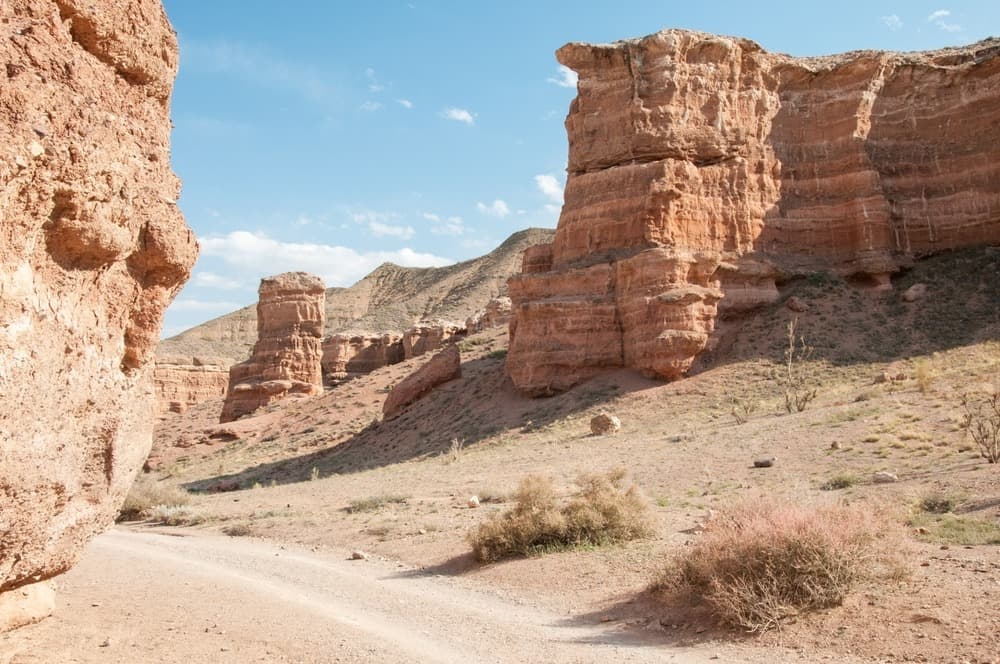
Charyn Canyon cuts through southeastern Kazakhstan for 154 km, along the river of the same name. Nicknamed the "Great Canyon of Kazakhstan" or the "little brother of Arizona's Grand Canyon," it unfolds red sandstone cliffs 150 to 300 m high, carved by 12 million years of erosion. Its emblematic site, the Valley of Castles, lies 190-220 km east of Almaty, roughly 3 to 4 hours' drive away.
Why visit Charyn Canyon
The canyon combines three rare assets within easy reach of Almaty: spectacular geology, protected biodiversity, and day-trip itineraries. The red sedimentary sandstones and dark volcanic layers visible at the base of the gorges tell the story of an inland sea that dried up and was then lifted by Tian Shan tectonics. Colors shift throughout the day, from vermilion at noon to ochre and purplish tints at dusk.
The site is part of a national park that shelters a relict Sogdian ash forest, a remnant of the ice age, as well as diverse steppe and mountain fauna. It remains one of the most accessible natural excursions from Almaty, complementing visits to Kolsai-Kaindy lakes or Altyn-Emel national park.
History and geological formation
The canyon formed approximately 12 million years ago. The Charyn River, originating in the Tian Shan mountains, carved the plateau through the combined action of water, wind, and condensation, a process known as autogenic erosion. The dark volcanic layers, the oldest, occupy the base; more recent sedimentary deposits overlie them and form the pillars and silhouettes at the summit.
The name "Charyn" may derive from the Uyghur Sharyn ("tooth-bearing tree"), referring to the ancient ash forest, or from the Turkish çar ("cliff"). The Sogdian ash forest, once extensive, declined with climatic aridification. Its relict populations have been protected since 1964, and Charyn National Park was officially established on February 23, 2004.
What to see in the canyon
Valley of Castles
This is the most visited section, accessible directly from the park's main entrance. It stretches 2 to 3 km long, 20 to 80 m wide, with walls reaching up to 100 m. Its sandstone formations resemble towers, fortresses, and monumental gates. The main trail is easy, about 2 km one way (5 km round trip including the return on top), manageable for any reasonably fit hiker.
Other canyons in the park
The park encompasses several distinct gorges, each with its own character:
- Temirlik Canyon: rust-colored walls, accessible by 4x4.
- Yellow Canyon (Uzunbulak or Moon Canyon): light, whitish rocks.
- Red Canyon: intense hues, arid landscapes.
- Bestamak Canyon: approximately 6 km, featuring U-shaped valleys and narrower passages.
Secondary areas of Kyrtogay and Tazbas complete the ensemble. Several viewpoints offer sweeping views over the Valley of Castles.
Flora and fauna
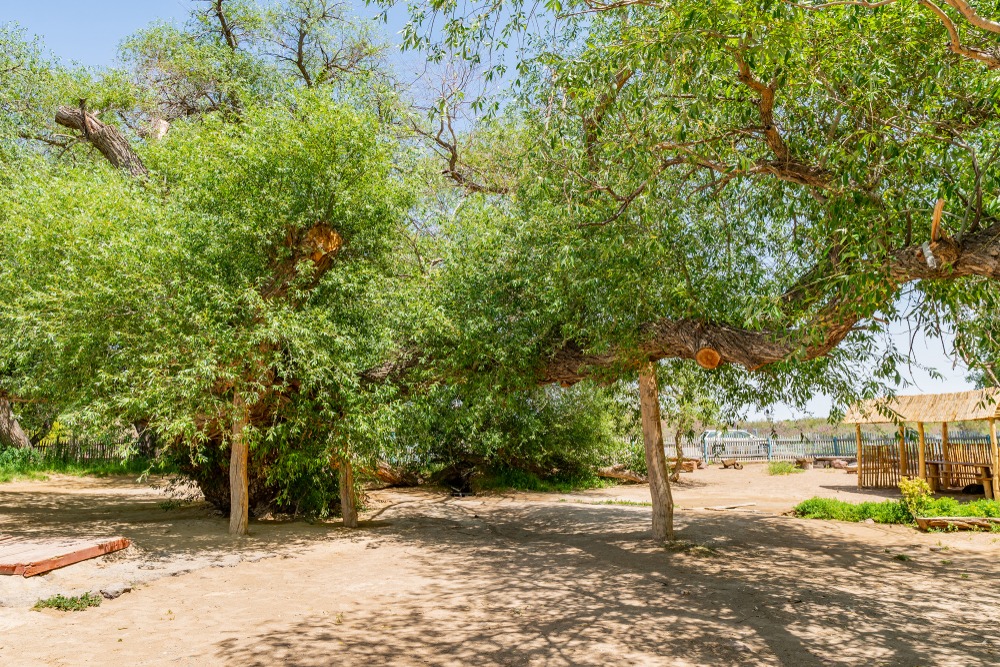
The park records over 1,500 plant species, 17 of which are listed in Kazakhstan's Red Book. Along the river, willows, poplars, and tamarisks create shaded corridors. The Sogdian ash forest extends over 25 km: it is one of the last significant fragments of this Central Asian species.
Fauna includes 62 mammal species, 103 nesting birds, and 25 reptiles. You may observe foxes, steppe hares, marmots, ibex, and the goitrous gazelle, a threatened species. Among birds, lammergeiers and golden eagles soar over the cliffs. The Charyn River is home to an endemic fish, the naked osman.
When to go
The climate is continental desert, with marked extremes: down to -30 °C in winter and 40 to 45 °C in summer. The best periods are April to June and September to October, when temperatures remain suitable for hiking and light remains soft in the morning and late afternoon.
In summer, heat in the Valley of Castles is intense and shade rare: bring a hat, sunscreen, and at least 2 liters of water per person. In winter, the canyon remains accessible but requires warm clothing and shoes adapted to ice.
How to get there from Almaty
The canyon is only accessible by road. Allow 190 to 220 km from Almaty, or 3 to 4 hours of travel depending on conditions.
- Car or taxi: A-351 highway via Shelek (Chilik), Baiseit, and Kokpek, then the Kegen road. A marked 9 km road leads to the park parking.
- Organized excursion: many agencies in Almaty offer day trips or two-day outings, with transport and guide included.
- Public transport: no direct connection. A few marshrutkas pass nearby, but then require a taxi or a long walk.
Practical information
Park entrance is paid (modest fee, possible surcharge for vehicle or camping); a passport is requested at reception. Since 2021, infrastructure has been modernized: ecological toilets, kiosks, shelters, fountains, and viewpoints now dot the main trails.
Bring hiking boots, water, sun protection, and a camera. Stay on marked trails to limit erosion. Camping is possible in certain areas (Temirlik, Uzunbulak), as is yurt or lodge accommodation depending on the season. Rafting and kayaking are practiced on certain river sections, especially in spring and early summer when water flow is sufficient.
Combine with other sites
The canyon fits naturally into a broader itinerary around Almaty. Several regional sites complement your visit:
- Lake Alakol, further east, for its beaches and bird fauna.
- Kapchagay Reservoir, on the road to Almaty.
- Zharkent Mosque, a cultural stop toward the Chinese border.
Frequently asked questions
Frequently asked questions
Yes. Most visitors go for the day: 3 to 4 hours' drive each way, 2 to 3 hours hiking in the Valley of Castles, then the return. An early departure is recommended to enjoy the light and avoid summer heat.
Allow 2 to 3 hours for the Valley of Castles. A more thorough exploration, including another canyon such as Temirlik or the ash forest, requires a minimum of two days on site.
Swimming is not a common activity. The water flow, temperature, and protected status of the site make it occasional. The river is mainly used for rafting and kayaking in spring and early summer.
Not for the Valley of Castles, which is marked and easy. However, a guide or 4x4 is necessary for the secondary canyons (Temirlik, Bestamak, Uzunbulak), where trails are not signposted.
Plan your trip
Charyn Canyon naturally fits into an itinerary combining Almaty, Tian Shan lakes, and the Seven Rivers steppes. To build your Kazakhstan route, consult our Kazakhstan trips.
Interested in this visit?
We can include it in your personalised itinerary.