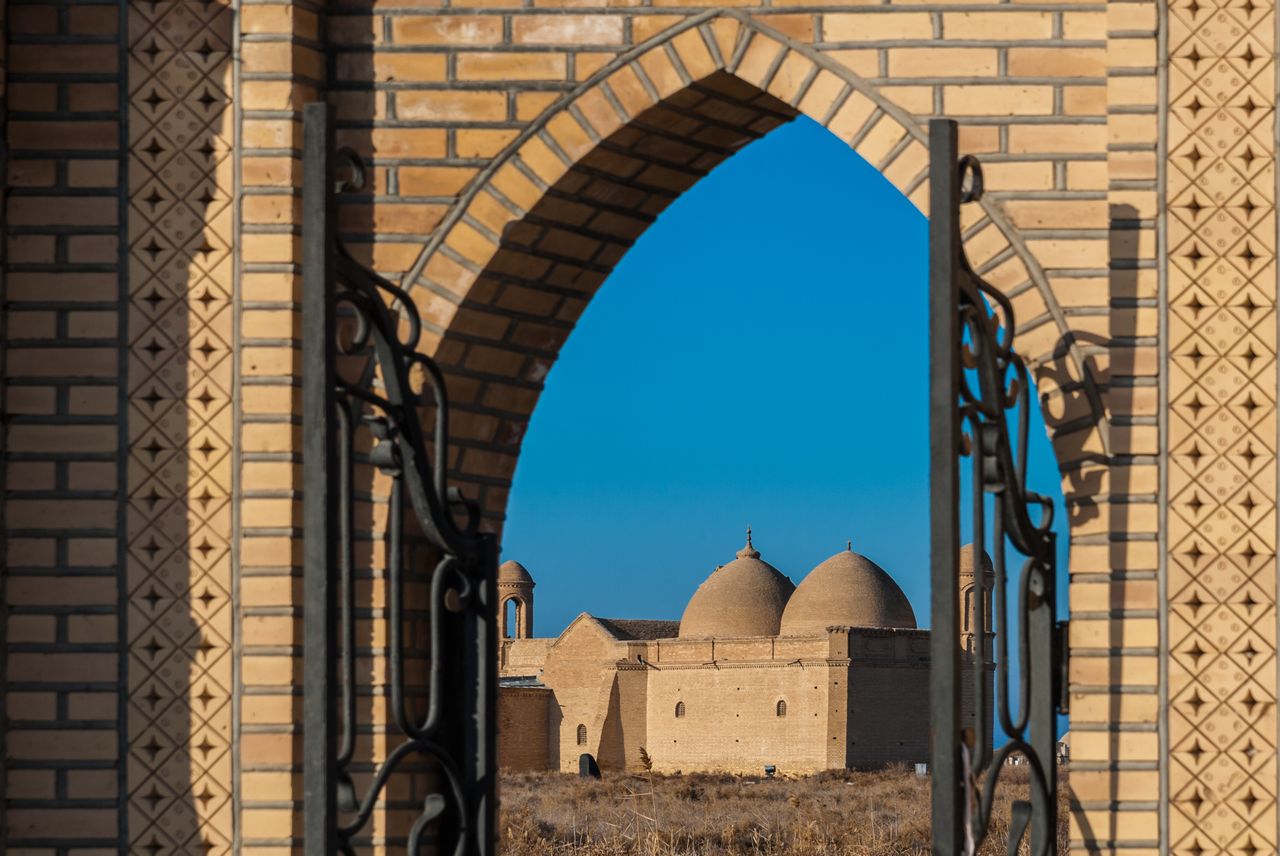
Tuzbair Salt Lake
A vast salt deposit in the Mangystau desert, Tuzbair offers a white surface with mirror-like reflections and some of Kazakhstan's most singular mineral landscapes.
Tuzbair salt lake stretches across the Mangystau region in south-western Kazakhstan, on the Mangyshlak peninsula. This vast salt deposit forms a striking mineral landscape: an immaculate white crust set against the ochre plateaus of the desert. Rarely visited by mainstream tours, it attracts seekers of extreme landscapes and photographers in pursuit of reflections and symmetry.
What you'll see
The lake's surface is covered with a thick layer of crystallised salt, sometimes tinted pink or red depending on the concentration of halophilic algae. In calm weather, a thin film of water creates a spectacular mirror effect. The surrounding clay banks and rock formations enhance the lunar character of the site.
- Salt crust: geometric textures and cracks visible on foot.
- Coloured reflections: pink or orange hues depending on season and weather.
- Open horizon: 360° panorama over the desert plateaus of Mangystau.
History and context
Tuzbair literally means "salt" in Kazakh (tuz = salt). The lake is part of a series of saline depressions characteristic of the Mangystau region, shaped by the progressive drying of the Caspian Sea and its ancient arms. These deposits have been exploited locally for salt for centuries.
Highlights of the visit
Walking on the salt crust
Treading across the white surface, listening to salt crunch underfoot and observing crystallisations up close constitutes the central experience of the site. Bring sturdy closed shoes: salt edges can be sharp.
The mirror effect
After light rain or in the early humid season, a thin film of water covers the salt and reflects the sky with photographic precision. This unpredictable phenomenon is one of the most sought-after by visitors.
The light of sunrise and sunset
The golden hours transform the white surface into shades of orange and rose. The absence of relief and vegetation amplifies the quality of raking light.
Photography tips
Come early in the morning or late afternoon for raking light that reveals salt textures. A wide-angle lens showcases the vastness of the surface. If a thin layer of water is present, position the camera low to maximise the mirror effect. Avoid midday sun: reflection is intense and colours fade.
Practical information at a glance
- Access: open-air natural site, accessible by 4×4 or all-terrain vehicle from Aktau.
- Attire: closed shoes essential (salt is sharp), sun protection indispensable.
- Recommended duration: 1 to 2 hours on site.
- Entrance: natural site, no known ticketing.
Location and access
Tuzbair is located in the Mangystau region, east of Aktau, the region's main city. The track to the lake requires a high-clearance vehicle. The Mangystau region hosts several remarkable natural sites accessible by circuit from Aktau, often combined over one or more days.
Local agencies in Aktau offer organised excursions that allow you to combine Tuzbair with other plateau sites.
Nearby
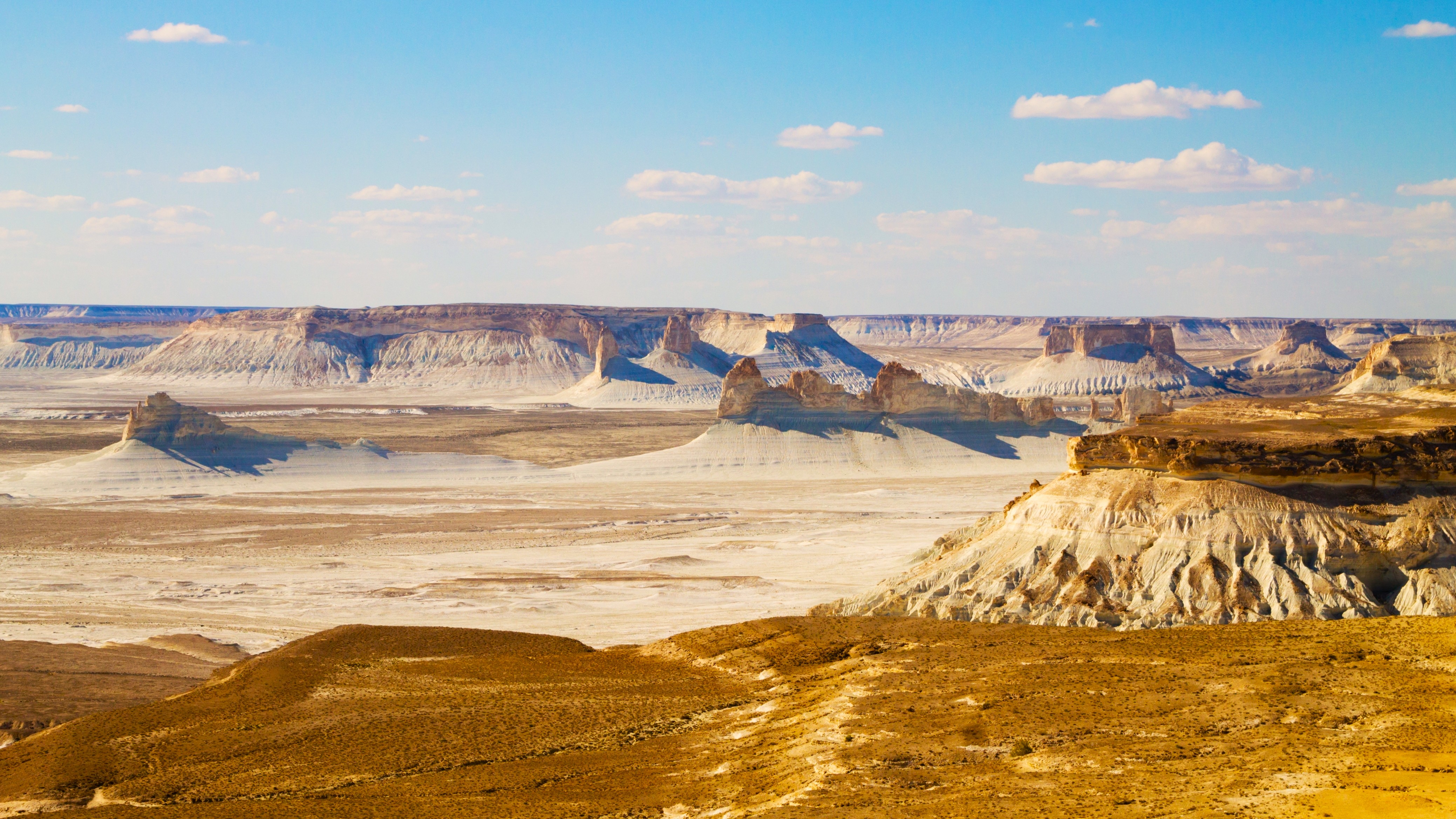
- Ustyurt Plateau — vast desert plateau with vertiginous cliffs, emblem of Mangystau.
- Torysh Balls Valley — field of natural spherical concretions, a unique geological phenomenon.
- Bozjyra Canyon — white rock formations and panoramas over the Caspian depression.
- Aktau — coastal city on the Caspian, logistical starting point for the region.
Frequently asked questions
Spring (April–May) and autumn (September–October) offer bearable temperatures and favourable light. In summer, the heat of the Mangystau desert can be extreme.
A 4×4 or high-clearance vehicle is strongly recommended. The tracks in the Mangystau region are unpaved and sometimes difficult.
Yes, the salt crust is generally passable on foot. Wear closed shoes: crystals can be sharp and the surface is uneven.
Yes. The region concentrates many nearby natural sites. A multi-day circuit from Aktau allows you to visit Tuzbair, Bozjyra, Torysh and the Ustyurt Plateau.
No known restrictions. The site is natural and open. Protect your equipment from dust and the intense reflection of salt.
Interested in this visit?
We can include it in your personalised itinerary.